Sunday, June 27, 2010

Jonathan Edwards

From Wikipedia

Jonathan Edwards (October 5, 1703 – March 22, 1758) was a preacher, theologian, and missionary to Native Americans. Edwards "is widely acknowledged to be America's most important and original philosophical theologian," and one of America's greatest intellectuals. Edwards's theological work is very broad in scope, but he is often associated with his defense of Reformed theology, the metaphysics of theological determinism, and the Puritan heritage. Recent studies have emphasized how thoroughly Edwards grounded his life's work on conceptions of beauty, harmony, and ethical fittingness, and how central The Enlightenment was to his mindset.

Edwards played a critical role in shaping the First Great Awakening, and oversaw some of the first fires of revival in 1733-1735 at his church in Northampton, Massachusetts. Edwards's sermon "Sinners in the Hands of an Angry God," is considered a classic of early American literature, which he delivered during another wave of revival in 1741, following George Whitefield's tour of the Thirteen Colonies.

Edwards is widely known for his many books: The End For Which God Created the World; The Life of David Brainerd, which served to inspire thousands of missionaries throughout the nineteenth century; and Religious Affections, which many Reformed Evangelicals read even today.

Edwards died from a smallpox inoculation shortly after beginning the presidency at the College of New Jersey (later to be named Princeton University), and was the grandfather of Aaron Burr.

Saturday, June 26, 2010

William Penn

For more than 75 years until the founding of the new Republic, William Penn's colony of Pennsylvania lived in peace with the Indian people of the area.

Penn, a Quaker, was the original socially responsible businessman who recognized that making a profit by paying attention to what is now called the "triple bottom line" was the surest way to both profitability and sustainability of those profits.

Penn's philosophy made Pennsylvania not only the safest place to live in the colonies but also the most prosperous place to live as well.

Wikipedia Biography

University of Virginia Bio

No Cross, No Crown
Written from Jail by William Penn at the age of 24 while he was in prison in the Tower for the “blasphemy” of a pamphlet, The Sandy Foundation Shaken, in which he had assailed what were regarded as the strongholds of the Christian faith. His purpose in writing No Cross No Crown he describes as “to show the nature and discipline of the holy Cross of Christ; and that the denial of self … is the alone way to the Rest and Kingdom of God.”
Written in the old English style and very difficult to read in its original form.
Google Books

Some Fruits of Solitude
William Penn
Bartlebys.com

The Holy Experiment - The Founding of Pennsylvania
Conceived in Liberty Volume 1: Murray Rothbard
Chapter 55


The Pink Cloud


Order this image

Sunday, June 20, 2010

Washington's Farewell Address to the Nation


One of George Washington's great heroes was the Roman leader Cincinatus who governed for a period of time and then returned to his humble roots. Washington saw this as a mark of a great leader - in fact he believed the example so powerful that he and other colonial leaders and founders of the time, including Henry Knox, actually established a social club called the "Society of Cincinati"

Washington's quiet strength was a character trait that created great political capital for him among founders who could agree on little else in the course of the nation's founding period. For this reasons there are actually very few speeches by Washington that are enshrined in the annals of political rhetoric. However his farewell address probably ranks at the top of these.

Washington's Farewell Address to the Nation.

Friday, June 18, 2010

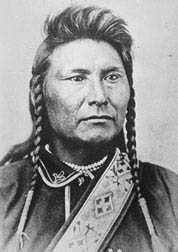
Chief Joseph of the Nez Perce


Joseph is one of the great figures of American history as both a political leader and a military leader.

His fame as a military leader came not from the fact that Joseph was a warrior but rather a great tactician who led a small band of Nez Perce to the border of Canada, with the goal of joining Sitting Bull who had found amnesty and protection in Canada.

In August of 1877 Joseph and his tribe had been ordered to surrender and move to the reservation. In the cover of night they escaped and headed north, first to meet up with members of the Crow nation and then, after being betrayed by the Crow, Joseph turned toward Canada seeking a land where Buffalo still roamed and where his people could live peacefully.

For 3 months Joseph and his small band evaded over 2,000 troops under the command of General Howard, who ultimately gained a grudging admiration for the Nez Perce leader. With 2,000 U.S. soldiers in pursuit, Joseph and other Nez Perce chiefs led 800 Nez Perce. The Nez Perce outmaneuvered and battled their pursuers traveling 1,600 miles (2,570 km) across Oregon, Washington, Idaho, Wyoming, and Montana. General Howard, leading the opposing cavalry, was impressed with the skill with which the Nez Perce fought, using advance and rear guards, skirmish lines, and field fortifications. Finally, after a devastating five-day battle during freezing weather conditions with no food or blankets, Chief Joseph formally surrendered to General Nelson Appleton Miles on October 5, 1877 in the Bear Paw Mountains of the Montana Territory, less than 40 miles (60 km) south of Canada in a place close to the present-day Chinook in Blaine County.

At the end of the Battle, Joseph and the Nez Perce camped - having announced their plans to surrender the following day. Joseph encouraged all those healthy enough to continue on to Canada to escape across the border during the night and he remained behind with the sick and wounded. When Joseph surrendered to General Howard the following day it is said that less than 1/2 of the surviving members of his band were with him and the rest had escaped to freedom in Canada.

The battle is remembered in popular history by the words attributed to Chief Joseph at the formal surrender:

"Tell General Howard I know his heart. What he told me before, I have it in my heart. I am tired of fighting. Our chiefs are killed; Looking Glass is dead, Too-hul-hul-sote is dead. The old men are all dead. It is the young men who say yes or no. He who led on the young men is dead. It is cold, and we have no blankets; the little children are freezing to death. My people, some of them, have run away to the hills, and have no blankets, no food. No one knows where they are—perhaps freezing to death. I want to have time to look for my children, and see how many of them I can find. Maybe I shall find them among the dead. Hear me, my chiefs! I am tired; my heart is sick and sad. From where the sun now stands, I will fight no more forever."

It is said that his tactics are still taught today at West Point.


Biography of Joseph(Wikipedia)
Speeches of Joseph

Tuesday, May 18, 2010

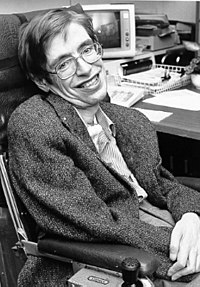
Stephen Hawking

The Einstein of the Modern Era

From Wikipedia:

Stephen William Hawking, CH, CBE, FRS, FRSA (born 8 January 1942) is a British theoretical physicist, whose scientific career spans over forty years. His books and public appearances have made him an academic celebrity and he is an Honorary Fellow of the Royal Society of Arts,[2] a lifetime member of the Pontifical Academy of Sciences,[3] and in 2009 was awarded the Presidential Medal of Freedom, the highest civilian award in the United States.[4]

Hawking was the Lucasian Professor of Mathematics at the University of Cambridge for thirty years, taking up the post in 1979 and retiring on 1 October 2009.[5][6] He is also a Fellow of Gonville and Caius College, Cambridge and a Distinguished Research Chair at the Perimeter Institute for Theoretical Physics in Waterloo, Ontario.[7] He is known for his contributions to the fields of cosmology and quantum gravity, especially in the context of black holes. He has also achieved success with works of popular science in which he discusses his own theories and cosmology in general; these include the runaway best seller A Brief History of Time, which stayed on the British Sunday Times bestsellers list for a record-breaking 237 weeks.[8][9]

Hawking's key scientific works to date have included providing, with Roger Penrose, theorems regarding singularities in the framework of general relativity, and the theoretical prediction that black holes should emit radiation, which is today known as Hawking radiation (or sometimes as Bekenstein-Hawking radiation).[10]

Hawking has a neuro-muscular dystrophy that is related to amyotrophic lateral sclerosis (ALS), a condition that has progressed over the years and has left him almost completely paralysed.


Science in the New Millenium
Stephen Hawking Asks Big Questions about the Universe
Stephen Hawking's Public Lectures
Professor Hawking's Website

Sunday, May 16, 2010

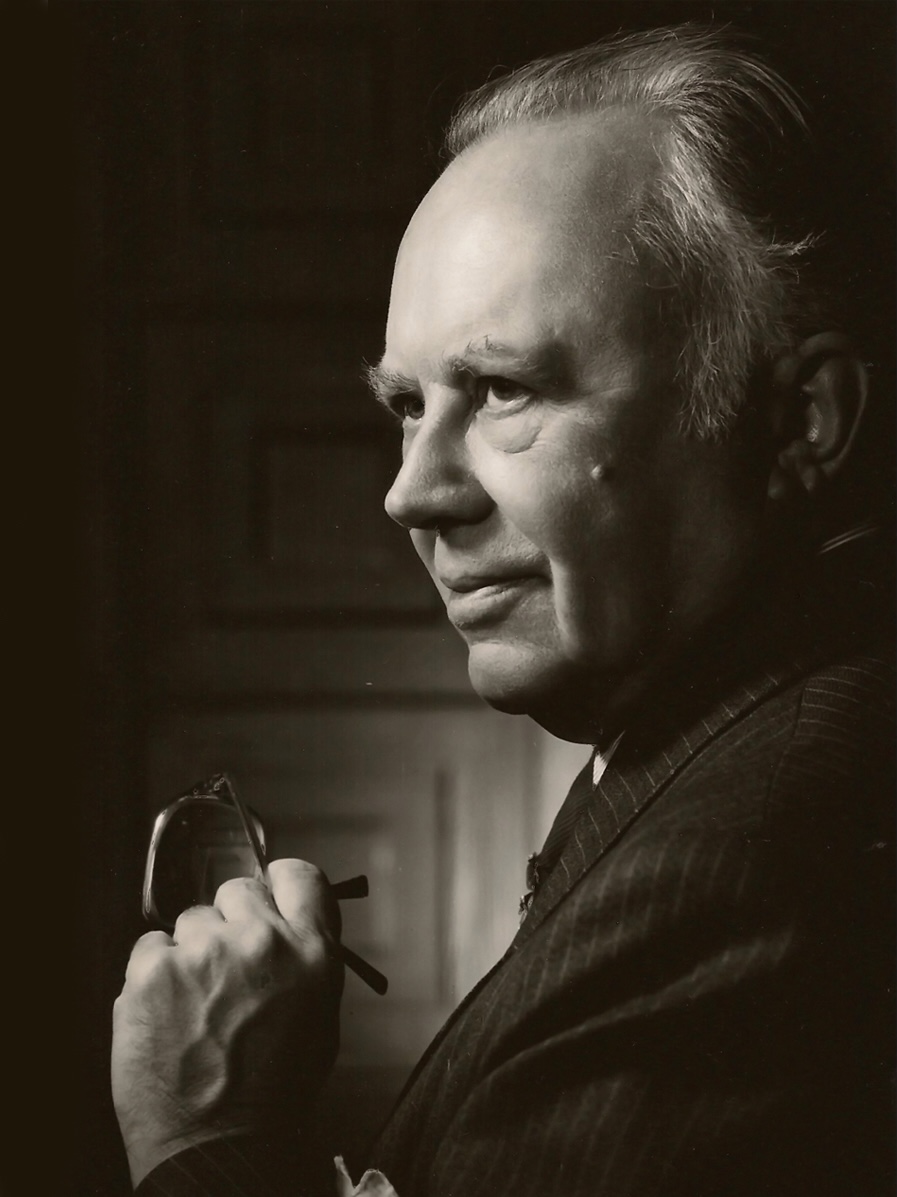
Russell Kirk (October 19, 1918 – April 29, 1994)


Russell Kirk (October 19, 1918 – April 29, 1994) was an American political theorist, historian, social critic, literary critic, and fiction author known for his influence on 20th century American conservatism. His 1953 book, The Conservative Mind, gave shape to the conservative movement. It traced the development of conservative thought in the Anglo-American tradition, giving special importance to the ideas of Edmund Burke. Kirk was also considered the chief proponent of traditionalist conservatism.

Wikipedia Biography

Saturday, May 15, 2010

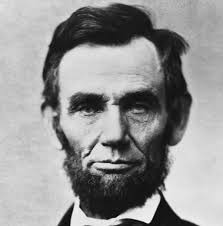
Abraham Lincoln Revealed

Looking Deeper at Lincoln
Historian and Lincoln biographer Ron C. White discusses Lincoln in some depth in this piece.
I Tunes University.
Click here.

Words Matter
Michael Zuckert parses the Gettysburg address in a way that examines Lincolns intent in its historic context and makes some comparisons with those who invoke Lincomns address today in remembering the victims of 9-11. Zuckert is professor of Political Science at Notre Dame University.
Do you come to the same conclusion regarding the 9-11 comparison as Zuckert?

The Fiery Trials of Abraham Lincoln
Dr. Richard Norton Smith, historian and speechwriter examines the myths and reality behind the man. Click here.